A Multi-Year Research Program on Curriculum experience
Overview
Some product problems don't get solved by one great study, they get solved by the same finding showing up, independently, across several years of differently-designed research until it's impossible to argue with. That's what happened with curriculum findability and search at Kiddom. Between 2022 and 2025, I ran a series of studies using different methods, different curricula, and different teacher segments. Nearly every one of them converged on the same underlying problem, which got a dedicated Search initiative funded and staffed.
"I have to go to a new tab and search 'OUR' to find supporting materials." — ELA teacher, 2024
"It is so hard to find something, like I can't separate Unlock and assessments. I have to play this scroll game." — ELA teacher, 2024
"We're teachers! Good Lord! We're busy!" — ELA teacher, 2023
"It seems like a lot in a small area. The PDF is more reader friendly." — ELA teacher, 2022
"I have to go to a new tab and search 'OUR' to find supporting materials." — ELA teacher, 2024 "It is so hard to find something, like I can't separate Unlock and assessments. I have to play this scroll game." — ELA teacher, 2024 "We're teachers! Good Lord! We're busy!" — ELA teacher, 2023 "It seems like a lot in a small area. The PDF is more reader friendly." — ELA teacher, 2022
Same theme, different research
Across different projects, the same problem was highlighted: no matter what band-aids we apply, the same underlying core usability issues will be there.
This issues include: high density of curriculum content (hard to read and comprehend), lack of findability of content (textbooks don’t always match digital version), and challenge of finding relevant materials just-in-time.
Role: Lead Researcher, partnered with our principal UXR (research strategy, fieldwork, synthesis)
Timeline: 2022 – 2024
Methods: Semi-structured interviews, in-context field visits, competitive analysis, comparative moderated usability testing, analytics-informed recruitment, post-release surveys
Impact: Prioritization of several key features: Search, Kiddom Assistant, Lesson Clipper, Content readability improvements
Across every one of those studies, independent of methodology or curriculum, the same category of problem kept reappearing.
1:1 virtual interviews, teachers described Kiddom as harder to scan than a PDF or physical guide, and said finding a specific activity again later "takes time."
Study 1 (n=5)
3 districts (MO, KY, WI), spanning low/medium/high usage users
Study 2 (n=12)
New teacher users, split promoters vs. detractors by school NPS score
1:1 virtual usability testing, teachers with the lowest engagement were disproportionately the ones who couldn't complete basic wayfinding tasks.
Study (n=11)
6 EL + 5 Math; mix of current/churned users across grade levels
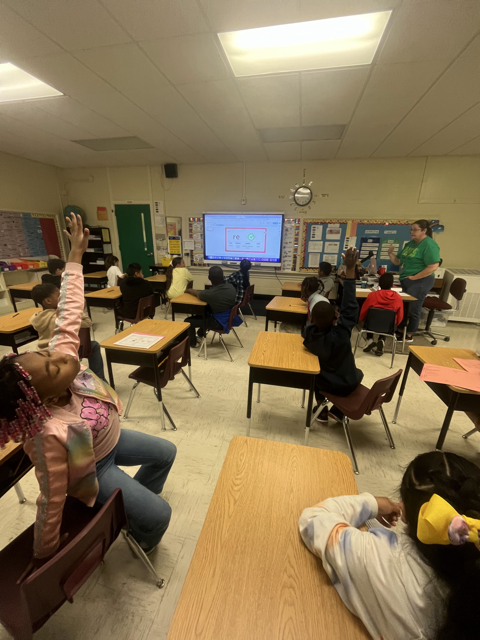
field research + 1:1 interviews, teachers described scrolling through Kiddom as functionally equivalent to flipping through pages in a manual.`
Study 1 (n=5)
heavy Kiddom users, experienced teachers.
Study 2 (N=11)
Field visit: 2-hour PL session at Tollgate, mix of new/experienced
2022
2023
2024
2024 study deck sample
2022 study deck sample
Features the Research Justified
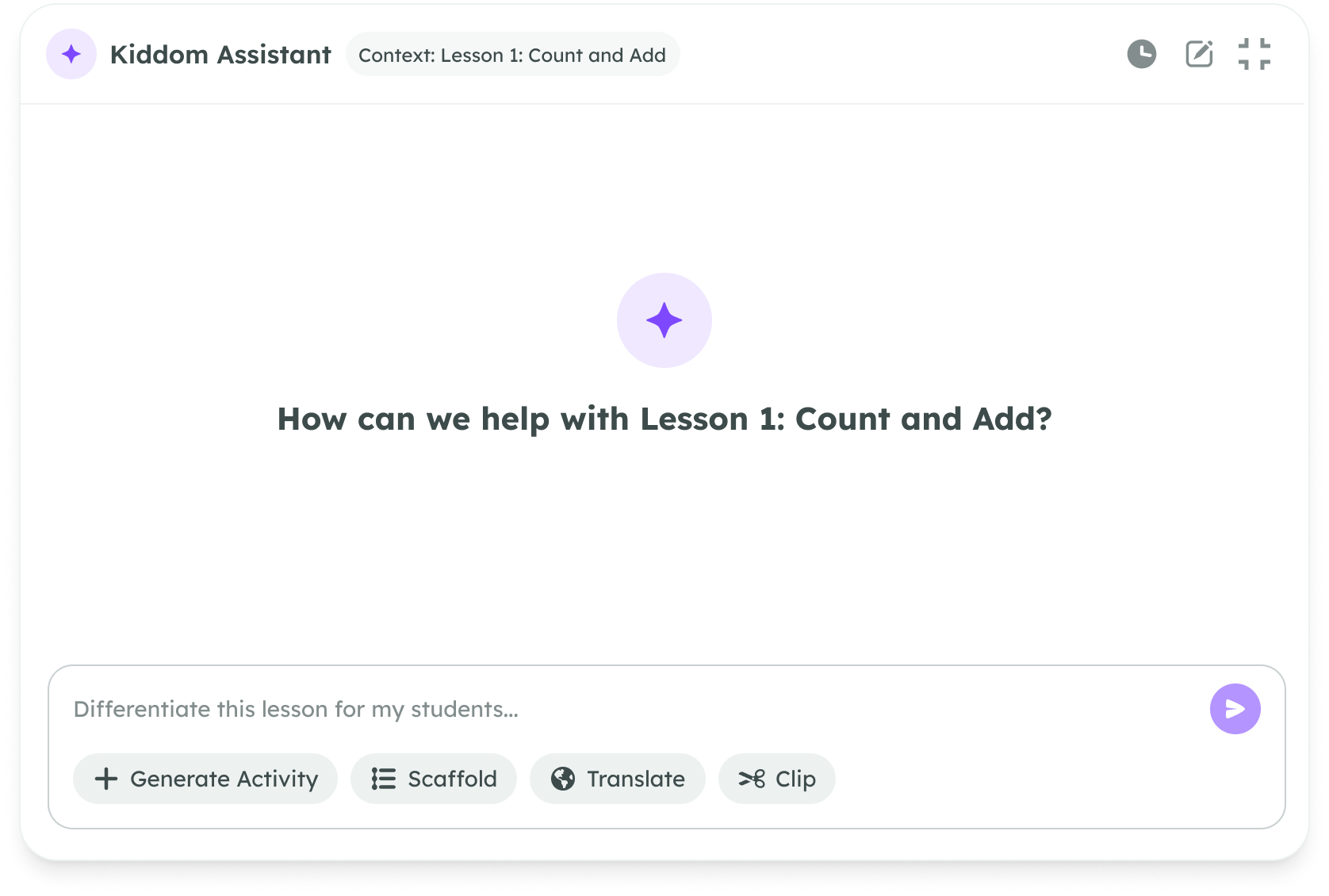
Kiddom Assistant | teachers need an accessible way to unpack their dense curriculum and make it easier to understand.
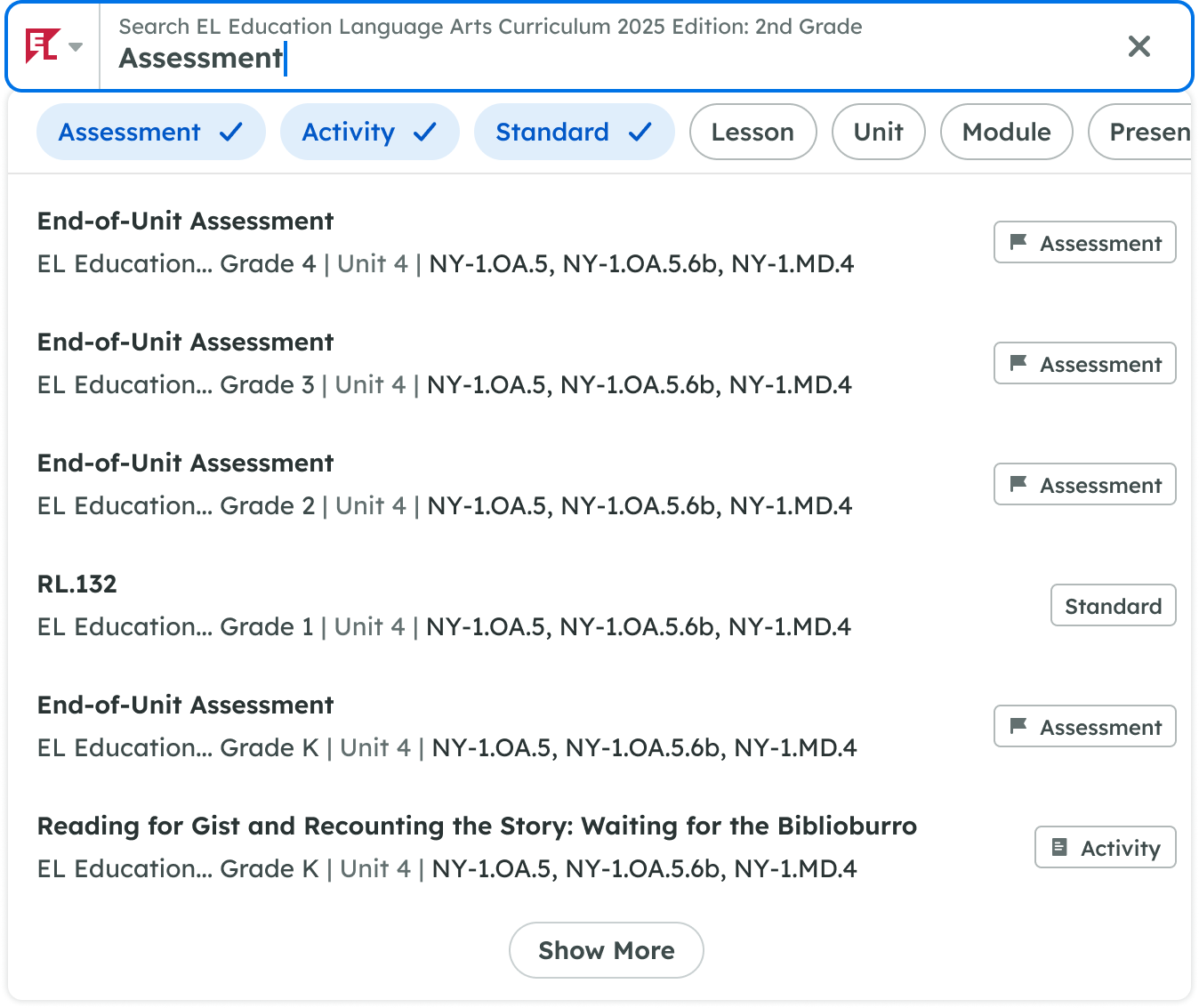
Search | our current search did not do the job and was not contextual. It was unusable but checked the box, so it wasn’t prioritized for a long time until this research made the choice for us.
Lesson Clipper | teachers across multiple studies described manually rebuilding slide decks and pulling pieces from several lessons at once; this became one of the clearest AI-assisted opportunities on the roadmap.
Collaborative annotations and content links | recurring requests to save notes and jump directly to referenced material instead of hunting through paragraphs.
Printing improvements | fieldwork surfaced how often teachers were manually copy-pasting student work to print it.
Reader experience improvements | persistent findings about text density and scannability that fed directly into content design guidelines.
Search
Historically, Search had been difficult to justify building because of a poor data infrastructure. However, this research made it clear it would solve a lot of teacher usability problems, and it was worth the large investment in better data mapping.
Designer: Me
Kiddom Assistant
What do teachers care about when they’re looking at a lesson? What questions do they need answered?
Internally this research helped us understand what we should prioritize building first: a lesson helper or a kiddom platform helper? A lesson helper became the clearest answer. Content is king!
Designer: Me
Appendix: fun @ field visits
Lumberton, North Carolina
ELA Classroom
April 2024
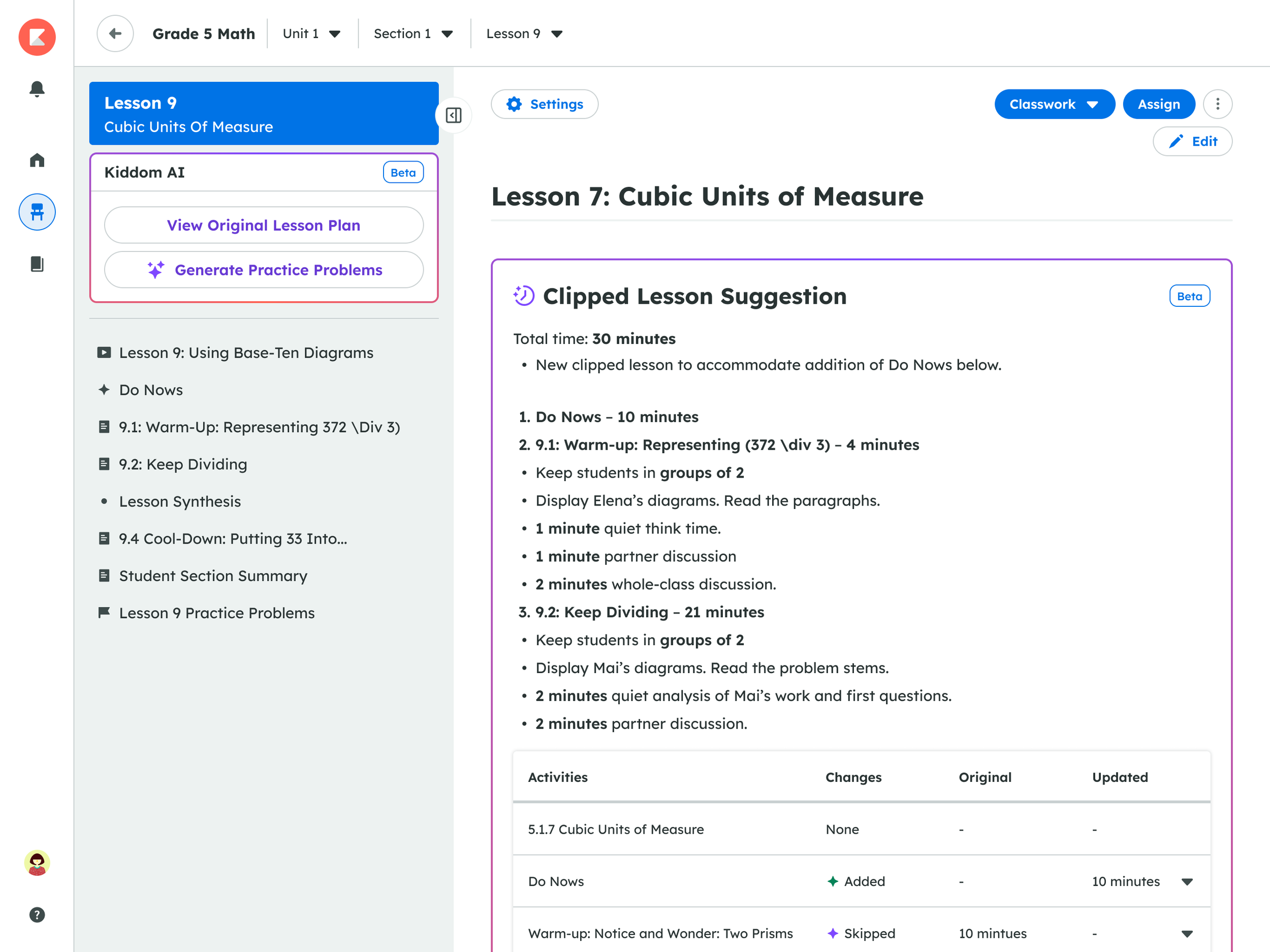
Lesson Clipper
One of the major problems with Kiddom’s curriculum is their density. It’s too much content for a realistic classroom to get through in a normal class period. Thus, Lesson Clipper was born to help teachers cut down the lesson content without losing the core standards addressed.
Designer: Teammate!
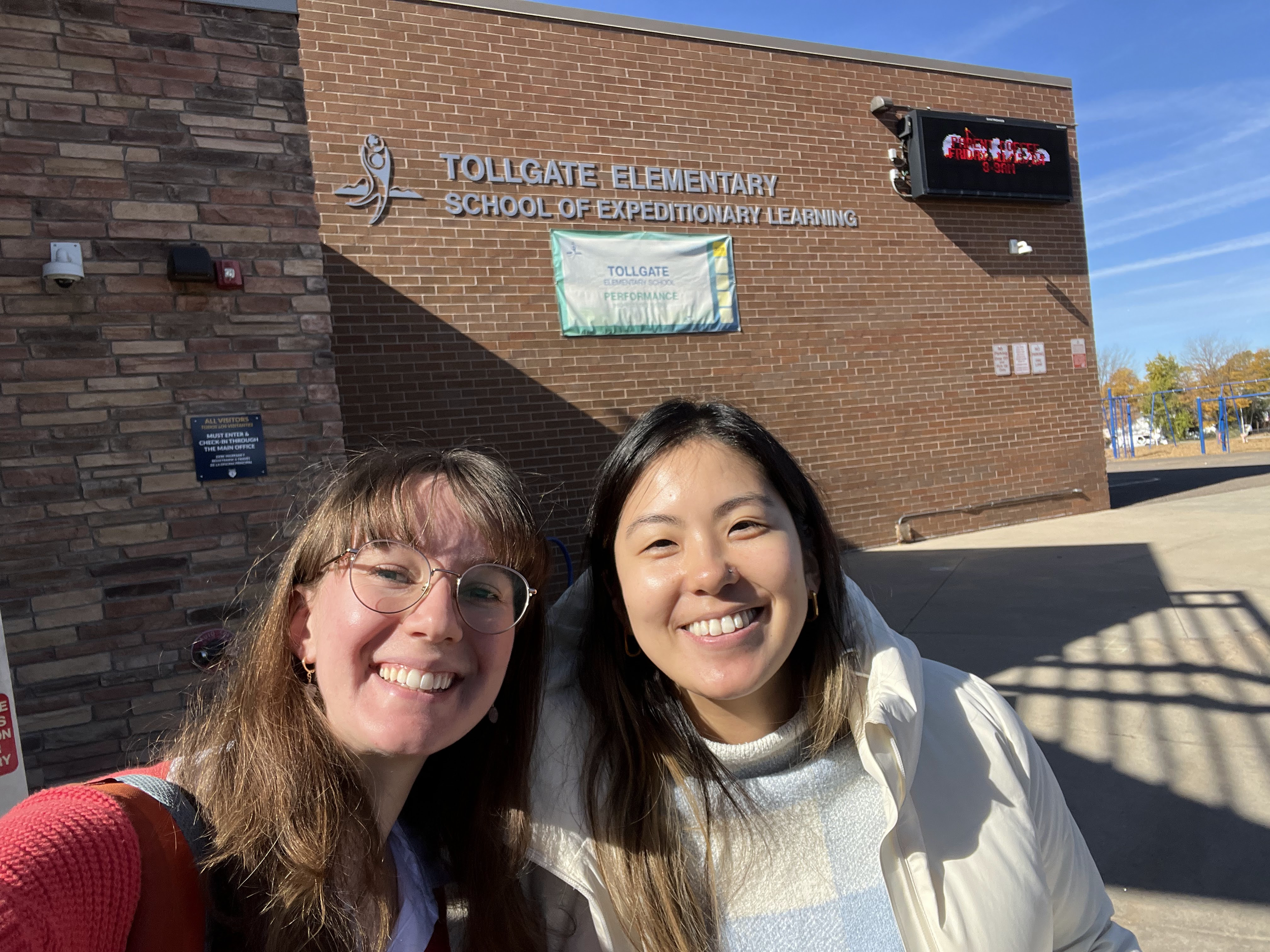
Me (left), Customer Success Manager (right)
ELA Study field visit
Denver, CO
Oct. 2024